Marketing that keeps working when you don't
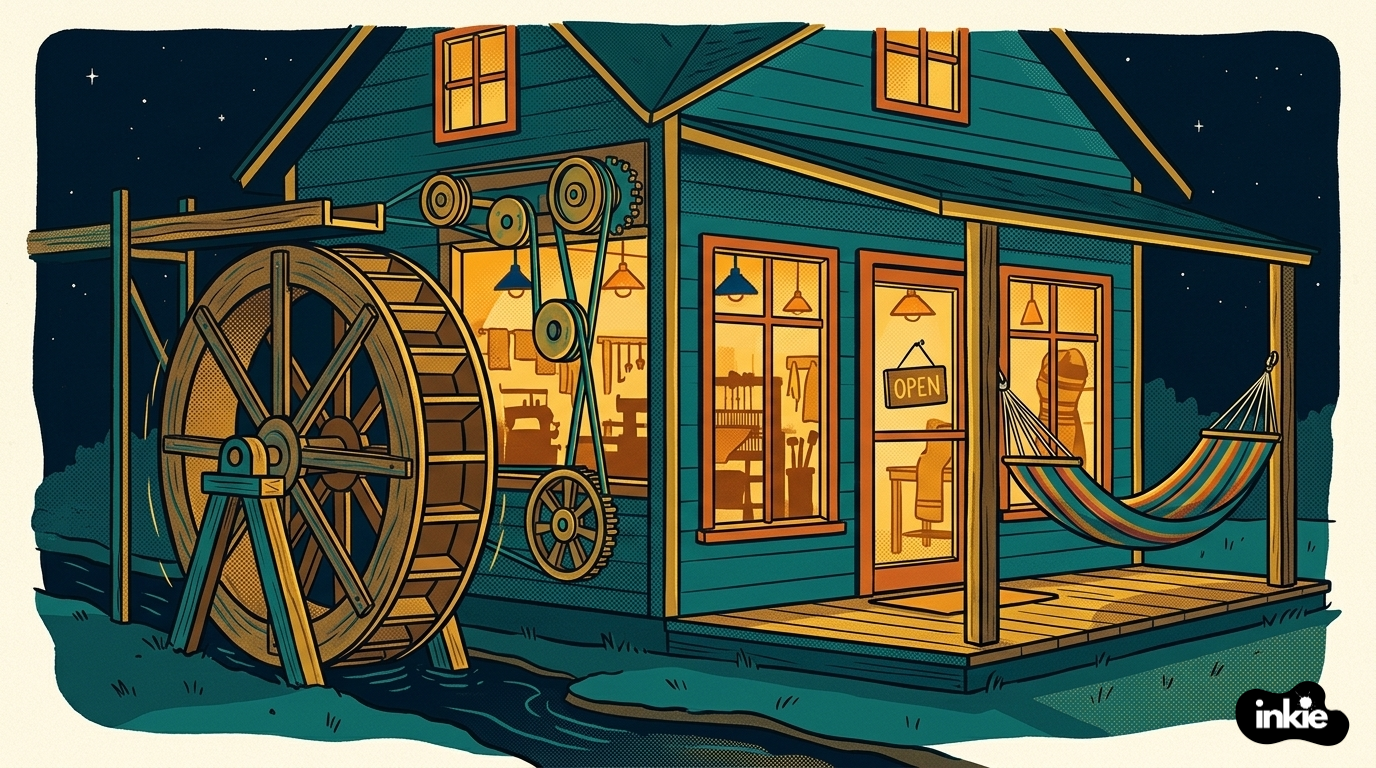
We have all experienced the Monday morning resolve. You sit down with a fresh cup of coffee, look at a blank calendar, and decide that this is the week everything changes. This is the week you will post three times, write that long-overdue newsletter, and engage with fifty potential clients in the comments. You feel capable, focused, and determined to finally get on top of your marketing.
Then Wednesday happens. A client project needs an urgent rewrite, a family member needs your support, or your energy levels simply fall off a cliff. By Thursday, the guilt has set in. By Friday, marketing has been pushed to the bottom of the list yet again, and you are left with the familiar, heavy feeling that you are somehow bad at this.
But here is the truth, you are not bad at this. The tools and advice you have been given are wrong for your brain.
Most marketing advice is built on the assumption that you have a flat, predictable line of energy every single day of the year. It relies on willpower, discipline, and daily grinding. The problem is that willpower is a volatile resource. For neurodivergent founders, or anyone balancing the chaotic reality of running a small business, energy is cyclical, not linear. When you build a marketing strategy that requires you to show up with high energy every single day, you are building a house on sand.
The goal is not to force yourself to become more disciplined. The goal is to build a setup that keeps working while you get on with the actual job, or while you simply take a break.
The trap of the daily grind
When you rely entirely on real-time effort to market your business, your business only exists when you are actively shouting about it. If you stop posting, your lead pipeline dries up. If you take a week off to recover from burnout, your digital storefront goes dark. This creates an exhausting cycle of feast and famine, where you are either too busy working with clients to market, or too panicked about a quiet calendar to do your best work.
To break this cycle, we have to stop treating marketing as a daily chore and start treating it as infrastructure.
Think of your physical shop, if you had one. You would not stand outside on the pavement twelve hours a day, waving a sign and shouting at passers-by. You would build a beautiful window display, put a clear sign over the door, and set up a system that allows people to walk in, browse, and buy whether you are standing at the till or sitting in the back room with a cup of tea.
Digital marketing should work exactly the same way. It should be a quiet, background system that works on your behalf, especially on the days when you do not have the energy to explain what you do.
The anatomy of a background system
Building a system does not mean buying complicated, expensive software or spending months learning how to code. It is about setting up a few connected assets that do the heavy lifting for you. When these pieces are in place, they form a web that catches interest, educates your audience, and guides them towards working with you, without requiring your constant, active presence.
Here are the key parts of a marketing system that does not need your best day to run.
1. The living link
Your social media bio is often the first place people go when they want to learn more about you. However, many business owners treat this as a static signpost, or worse, a graveyard of old links to events that ended three months ago.
A living link is a setup that updates itself. By using a central hub that automatically displays your latest blog post, your current service, or your newest digital resource, you ensure that anyone who clicks is met with fresh, relevant information. You do not have to manually edit five different social bios every time you write something new. The system handles the routing, leaving you free to focus elsewhere.
2. Getting found, not just seen
There is a massive difference between renting attention and owning real estate. Social media platforms are rented attention. You post something, it stays in the feed for twenty-four hours, and then it vanishes into the archive, never to be seen again.
When you focus on SEO and search-friendly content, you are building assets. When you write a deeply helpful blog post that answers a specific question your clients are constantly asking, you are creating something that people will search for and find six months, or even two years, from now. This is content that works while you sleep. A single, well-written article can bring qualified traffic to your website week after week, long after the energy you used to write it has been spent.
3. Self-qualifying quizzes and intake forms
How many hours do you spend in your inbox answering the same basic questions? Or worse, how many discovery calls have you hopped on only to realise fifteen minutes in that the prospect cannot afford your services, or needs something completely different from what you offer?
A simple self-qualifying quiz or a thoughtful intake form on your website acts as a digital gatekeeper. It helps potential clients understand if you are the right fit for them before they ever book a slot in your calendar. It educates them on your process, manages expectations, and filters out the wrong fits, all in the background. By the time someone actually books a call, they are already warmed up, informed, and ready to say yes.
4. A voice that carries on
Your perspective, your expertise, and your unique way of looking at your industry are the most valuable marketing assets you have. But capturing that voice can feel incredibly difficult when you are tired.
The solution is to decouple creation from distribution. When you have high energy, you can write or speak freely, capturing your thoughts in their rawest, most authentic form. A reliable system then takes those thoughts, polishes them, and schedules them to go out consistently over the coming weeks. Your voice carries on speaking to your community, sharing your values and building trust, even during the weeks when you are completely offline.
Designing for your worst days
The secret to a sustainable marketing system is that it must be designed to withstand your worst days, not just accommodate your best ones.
If your marketing plan requires you to feel inspired, happy, and highly energetic in order to work, it is a fragile plan. A resilient system assumes that you will have weeks where you are tired, overwhelmed, or distracted by client projects. It builds in buffers, relies on evergreen assets, and uses automation to keep the lights on so that you do not have to.
When you remove willpower from the equation, the guilt vanishes too. You stop blaming yourself for not being a consistent, tireless machine. You realise that the problem was never your focus or your work ethic, the problem was simply that you were trying to run a marathon using willpower alone.
Where to start
If you look at this list and feel overwhelmed, take a deep breath. You do not need to build everything at once. In fact, trying to build a complex system overnight is the fastest way to trigger the exact burnout we are trying to avoid.
Start with one small thing. Look at your business today and find the single biggest repetitive task you perform in your marketing. Perhaps it is explaining your pricing, sending out booking links, or updating your social media bio.
Choose that one thing and build a system for it. Set up a single automated redirect, write one comprehensive FAQ page, or schedule just two helpful posts for next week. Once that first piece is running in the background, you will feel the immediate relief of knowing that a small part of your business is taking care of itself.
From there, you can slowly build out the rest, piece by piece, until you have a quiet, steady engine that keeps your business visible, respected, and growing, exactly as it should.